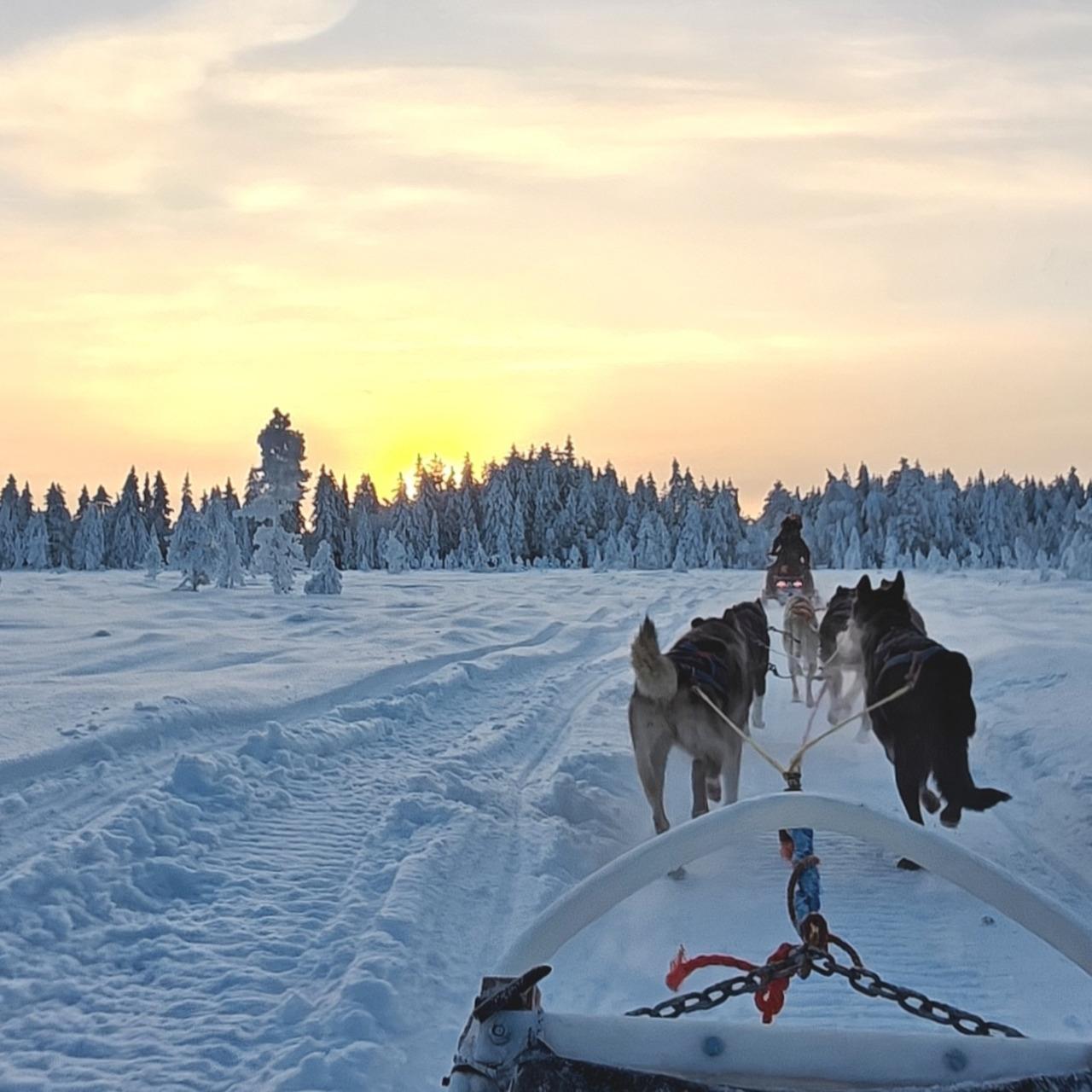
Choose the role that lets you enjoy the landscape. Driving can be the reason to book, but it also adds balance, braking and responsibility. A passenger ride trades that control for a steadier view and fewer physical demands.
Self-drive means active control, not a solo expedition
A guide normally gives instructions before the team sets off, but the guest driver still needs to stand, steer and brake according to the operator's rules. Two adults may share one sled and switch partway through.
The exact driver age, health and fitness requirements are product-specific. Confirm them before booking for a mixed-age or multigenerational group.
Passenger rides change the experience, not its value
On a musher-driven ride, guests sit in the sled while a professional controls the team. This can make photography, watching the dogs and sharing the ride with a child easier.
Passenger seating can feel colder because the rider is less active. Check what clothing is provided and how exposed the seating arrangement is for the exact product.
Sled sharing shapes the group decision
A two-person self-drive sled can work well for a couple who both meet the rules and want to alternate. It can be a poor fit if one adult expects to remain a passenger throughout or cannot take a driving turn.
Families should ask where children sit, who must drive and whether the adults can switch. Do not transfer an answer from one kennel to another.
Match the format to what you want to notice
Choose self-drive when the physical relationship with the sled and team is the centre of the day. Choose passenger format when the view, photography, conversation or lower physical demand matters more.
Distance still matters. A short self-drive introduction and a long passenger route create different days even though the driver label is settled.
Confirm five product-specific facts
Ask who may drive, whether switching is expected, where children sit, what clothing is provided and what happens if a guest cannot safely drive on the day.
If the provider cannot answer clearly, choose a product whose passenger or driver setup is explicit rather than relying on a category label.
Sources used for this guide
Rovaniemi Husky format comparison →Słomiński operator FAQ →Lapland Handbook family guide →Explore Lapland husky overview →Rovaniemi: Husky Safari with BBQ & Transfers
This exact product states a 6–10 km self-drive snow route, two guests sharing a sled and switching halfway. Its rules are an example, not a universal standard.